




Editors’ Note:
Hi, Laura and Jonathan here. A few of the pieces this week come from people who spent years up close with how poor households actually handle money, and keep coming back with something more tangled than the story usually told, and more persistent. Tim will be back for the next edition.
- Laura Freschi and Jonathan Morduch
1. Embodied Debt
Laura: For two decades, Isabelle Guérin has been conducting fieldwork with colleagues in the rural region of South Arcot in Tamil Nadu. Guérin observes in a new paper that credit in poor households is shifting from an occasional resource to a “substitute for income.” The share of household income going to debt service in her South Arcot sample rose from 44% in 2010 to 68% by 2021. Interest payments alone consumed 30% of earned income. If microfinance and consumer finance in poor countries are meant to expand choice, this set of figures could be seen as describing the opposite.
What keeps this seemingly unsustainable system running? Guérin points to “the dense social and moral texture of debt”—made up of reputation, networks of obligation, and gendered expectations about how people, and women in particular, are seen and judged. Lenders extend credit partly on the basis of how a borrower carries herself, who her family is, and whether she's seen as the kind of person who pays. Borrowers manage their repayment partly through the cognitive, relational, even bodily labor of staying in good standing, juggling obligations, and maintaining the appearance of someone who can be lent to.
Sure, this all sits a fair bit outside the usual economics-and-policy conversation. What makes Guérin a fellow traveler are the durable and modest points that financial life is life, and that the architecture of repayment in poor households has always been social, moral, and relational. Her work highlights unintended consequences that most economists have been unable, or perhaps unwilling, to see.
2. The Grand Arc
Laura:
“As a culture, we always want this grand arc: rags to riches, gets the girl, gets the guy. I wondered if I could write a book that didn't have improvement arcs, because it aligned with my observation of my communities. My brother has worked at Dick's Sporting Goods his whole life. My stepdad works at this auto-parts company. For 25 years, he worked from 3 p.m. to 12 a.m. We want stories of change, yet American life is often static. You drive the same car, people live in the same apartment, but it doesn't mean that their lives are worthless.”
This is poet and novelist Ocean Vuong in an interview with David Marchese that’s been rattling around my brain since I read it a couple months ago.
Vuong is talking about individuals but the same applies to firms, industries, and countries. The grand arc makes a good read. And this piece, by Daniel Yu, has a satisfying one. Yu, co-founder of the African B2B platform Wasoko, opens his essay in the launch issue of In Development, with June Jambiha, an informal clothes seller in Nairobi. She joined Wasoko for the predictability of a paycheck, by the end of the essay she is off to start her own firm. The way out of poverty, writes Yu, is building firms that export, create the capacity to compete globally, and train workers who carry that knowledge into the next generation of firms. The essay moves through Floramérica in Colombia, the garment industry in Bangladesh, and Wasoko in East Africa. These are the stories of the firms that scale, the workers who graduate into stable employment, and the countries that get “on the escalator.”
Yet there are lots of other stories, more typical ones. Most small firms in poor economies don't export. Most don't grow much. The Small Firm Diaries has been studying these firms that employ a few people, generate real income, and persist for years. Most don’t scale. The workers in them don't graduate. From the outside the picture is static, but from the inside…it isn't worthless. What's there is what most working lives have always been: the work, the other people on the shift, and the paycheck that will have to make ends meet.
3. Making Ends Meet (3 Decades Later)
Jonathan: Economists have had the loudest voices in framing policies to reduce global poverty. In the United States, however, sociologists, armed with ethnographic evidence, have long had a powerful influence. Sociologists (and some anthropologists) have told the stories of struggling families with an urgency and nuance often missing in economic tabulations (which we aspire to as well at FAI)—and policy has followed.
In 1997, Kathryn Edin and Laura Lein published the classic ethnography, Making Ends Meet: How Single Mothers Survive Welfare and Low-Wage Work, based on a study of 379 single mothers in Texas, Massachusetts, Illinois, and South Carolina, stretching over six years. The evidence pushed back against widely-held fears that providing cash assistance would reduce incentives to work hard and that it would undermine marriage. The women that Edin and Lein spoke with were struggling—even with cash assistance, and they often relied on others to make ends meet. The women were not “welfare queens” living large thanks to free money from the government.
This summer, nearly 30 years later, the Russell Sage Foundation published a look-back with a 2-part special issue of the RSF Journal. There have been big changes in those three decades: the gutting of “welfare as we knew it" (the end of the government’s main cash assistance program, AFDC), and then the gutting of TANF, the policy that replaced it. What we’re left with is the rise of a set of programs with more limited mandates (food assistance, support for low-income earners, and the expansion, for now, of disability support). These are supplemented with programs targeting sectors like housing, education, and criminal justice.
The RSF Journal special issue shows that single mothers in the USA are still struggling. Low-income households are often doubling-up to create affordable housing. Ideas about the safety net are evolving to encompass stability. And getting childcare is tough, especially when so many people are shifting to nontraditional jobs with nontraditional hours.
4. Guaranteed Income (and Treats)
Jonathan: In the same RSF Journal volume, Sara Constantino, Ajay Chaudry, and I contribute an essay on cash transfers, building from an RCT of cash transfers in Compton, California. In an earlier analysis (now being updated), the research team (which also includes Sidhya Balakrishnan, Sewin Chan, and Johannes Haushofer) stuck to the numbers, organizing the discussion around tables of estimated treatment effects. Here, instead, we report on a series of in-depth qualitative interviews. Over the two years of the study, 56 randomly-sampled participants were interviewed three times over two years, usually for over an hour.
One thing that struck us was how often respondents mentioned spending on what might be considered treats—meals at restaurants, visits to Disneyland, travel to see relatives. These treats were not a lot of money in the big picture, but they were mentioned fairly often. We were also struck by how often mention of treats came alongside choices that required considerable restraint, like catching up on long-overdue bills or paying off credit card debt. Treats and sacrifices were often seen as a package. Sacrifice and reward. We didn’t put forward a new economic interpretation of treats, but insights from psychology and behavioral economics might help describe choices like these—rather than dismissing them as obviously wasteful.
5. Industrial Policy is Cool Again?
Jonathan: Back in April, The Atlantic announced that “A Pillar of the Economics Establishment Admits That It Was Wrong.”
Could it be? I fell for the click-bait.
The Atlantic story argued that the World Bank has turned against “its old free-market absolutism.” The evidence is a March 2026 report that embraces the possibility of industrial policy as something other than a road to disaster.
The report is solid, and I’ll save comments for another time. What really struck me, though, was the framing of the Atlantic article rather than the report itself. True, the Bank admitted that it was wrong on industrial policy, but that already took place decades ago. How short our memories can be. The World Bank is not a hive of heterodoxy, but it’s not a neoliberal bastion either. When it comes to industrial policy, the ideas in the new report echo the Bank’s (1993!) work on the East Asian Miracle, which was hardly a work of free market absolutism. What about 2012’s New Structural Economics: A Framework for Rethinking Development and Policy led by World Bank Chief Economist Justin Yifu Lin? These were not small statements – they were big policy gestures. Sure, the World Bank still houses people with neoliberal tendencies, but the Bank’s openness to industrial policy also feels in keeping with a long stream of Bank policy thought.
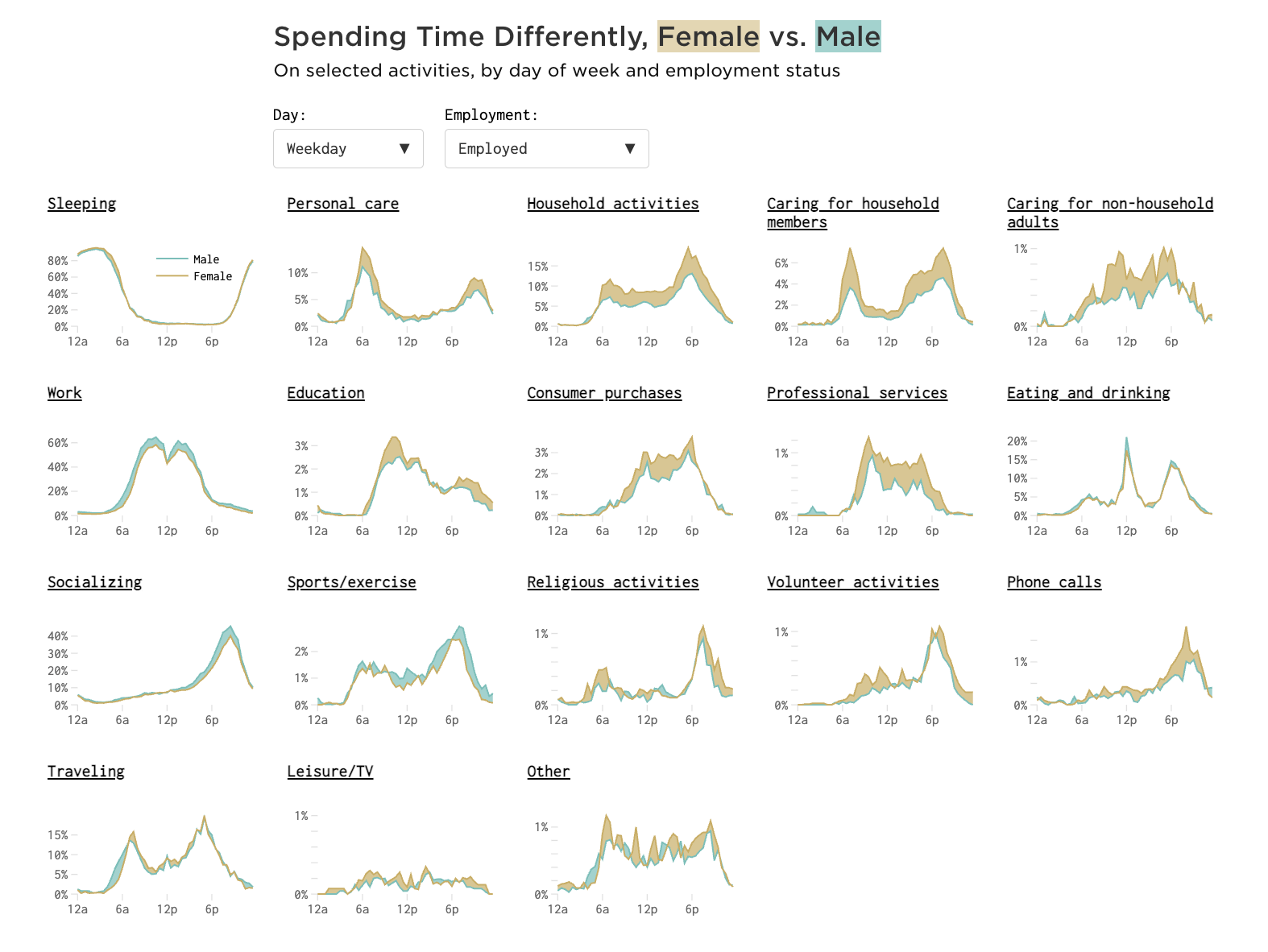
Graphic of the Week
The faiV is written by Timothy Ogden, Jonathan Morduch, and Laura Freschi, and produced by the Financial Access Initiative at NYU's Wagner Graduate School of Public Service.
Email: fai-wagner@nyu.edu
To translate the faiV into another language, view this email in your browser and click on translate at the top right.
Editor’s Note: I’m going to assume that you are seeing plenty of AI content (news and papers, not AI slop, though I’m sure you’re getting plenty of that too) from other sources, so I’m trying to think hard about the marginal value that the faiV can provide. As far as I’ve gotten so far: a) make sure that directly AI-related content does not take up more than 2 of the 5 items, and b) try to focus specifically on the cybersecurity issue for financial inclusion. Beyond that, I’m open to feedback on the value you get from the faiV in relation to AI to help guide us in the future. On a different note, I’ll be making a brief cameo appearance at the e-MFP Inclusive Finance Conference to moderate the opening plenary. If you haven’t registered, do so and I hope to see you there! - Tim Ogden