
WHAT WE DO
We are focused on exploring how financial services can better meet the needs and improve the lives of poor households.
We generate new evidence.
Through rigorous research and analysis we fill important gaps on how households and business use financial tools and services.
We systematize evidence and communicate lessons.
We clarify what is known, and what needs to be known, about the impact of all types of financial services in poor households.
We frame policy, regulatory and market issues.
We describe policy options, always making clear the trade-offs as well as the direct effects of policy choices. We take markets, scale and business models seriously, while also highlighting the limits and failures of markets in serving the disadvantaged.

How We Do It
Making quality financial services available to poor households is not a new goal, but it is an important one.
Progress, for some
Since 2009, when Jonathan Morduch and co-authors wrote that “Half of the World is Unbanked,” public and private efforts, aided by technology, have yielded huge but uneven progress. In 2021, gaps remain - between women and men, urban and rural - and disadvantaged communities in rich and poor countries risk falling further behind.
Poor households need diverse financial tools
Being able to buy what you need when you need it, put money aside for the future, and withstand bad luck are fundamental to navigating life’s opportunities and setbacks. The tools and services we rely on to do these things are as important to people living near the poverty line as they are to the wealthy, if not more so.
Our Impact
FAI continues to “connect the dots” on financial inclusion, with original research, field work, and synthesis of knowledge from across fields and geographies.
FAI was founded in 2006 by economists Jonathan Morduch, Dean Karlan, and Sendhil Mullainathan. Early on, FAI funded a series of RCTs that reshaped microfinance conversations, including early studies of microcredit impact, and innovative savings and credit products.
These agenda-setting studies led to a series of influential projects; among them:
The standard text used in courses for microfinance executives around the world.
A multi-country study of the daily and weekly financial lives of poor households, which radically reshaped the financial inclusion field, illuminating volatility as a central issue.
A year-long study of 235 households which provided new frameworks for conversations about poverty, inequality, and “good jobs” in the US and other wealthy countries.
Meet the Team
Managing Director
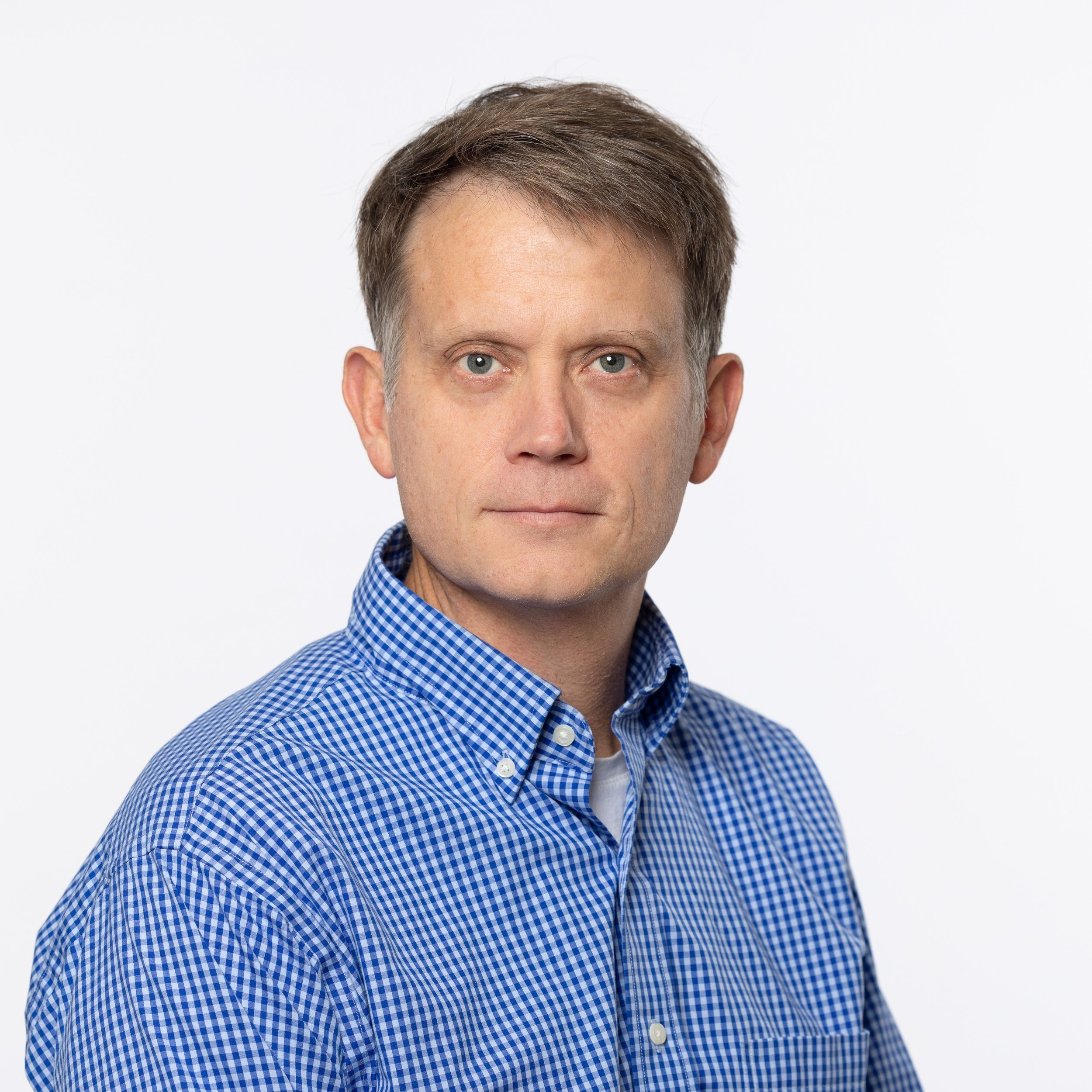
Tim serves as Managing Director, coordinating FAI’s research, communications and operations.
His previous work experience encompasses the private and nonprofit sectors. Prior to joining FAI he was the Chief Knowledge Officer at Geneva Global, Inc., an international philanthropy advisory company, and founding editor of Gartner Press. He founded and currently leads Sona Partners, a thought leadership communications firm, where he has helped develop more than 20 books for major publishers. Tim is co-author of Toyota Under Fire, and author of Experimental Conversations, a collection of interviews with economists conducting field experiments on poverty alleviation interventions. He also serves as chairman of GiveWell, and is a senior fellow of the Aspen Institute’s Economic Opportunities Program and Financial Security Program.
Deputy Director
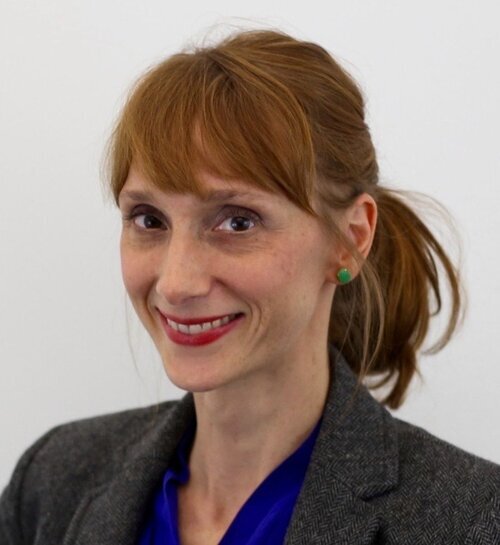
Laura works to make FAI’s research as impactful as possible through strategic communication and partnerships. She combines knowledge of user-centered communication with a background in international development.
Previously, she led business development and communications at Reboot, a design firm focused on cross-sectoral collaboration. At NYU’s Development Research Institute, she co-wrote an economic development history of Greene Street in New York City, and managed and co-wrote the Aid Watch blog with economist William Easterly, as a forum to debate aid policies and practices. Her work on this topic has been published in several major publications. Laura graduated from Brown University with a degree in comparative literature, and received her MA in International Development and Economics from the Johns Hopkins School for Advanced International Studies (SAIS). She speaks Italian and is based in Northern Italy.
Research Operations Manager (US)
Tracy oversees the operational development and execution of FAI’s United States research projects. Working with FAI’s US implementation partners and funders, Tracy manages research operations, coordinates engagement strategies, and engages in research and data analysis to support project outcomes. Previously, Tracy worked for the Australian Federal Government in economic policy reform and as a commercial litigation lawyer in private practice. Based in New York City, Tracy holds a Bachelor of Laws with First Class Honors from Curtin University (Australia) and a MPA specializing in international development from New York University’s Robert F. Wagner Graduate School of Public Service.
Research Operations Manager (Global)
Garrett oversees the operational development and execution of FAI’s international research projects. He collaborates with in-country research partners to manage research operations and ensure quality data collection and analysis. Previously, Garrett managed community development initiatives in Malawi, and led research projects in Tanzania and Ethiopia together with the World Bank, IFAD, the Gates Foundation, and local governments in Sub-Saharan Africa. He currently lives in Brooklyn, New York, and holds an MPA from Columbia University’s School of International and Public Affairs (SIPA).
Research Data Analyst
As FAI’s Research Data Analyst, David focuses on data cleaning, exploratory analysis, visualization, and econometric modeling. He previously worked at the National Planning Department in Colombia, as a Campaign Manager for Pinterest, and as an Associate Data Scientist at Publicis Group. His interests include international development, poverty, inequality, and how data science can influence policy making. He holds a BA in Economics from Universidad del Norte in Colombia, and will earn an MS in Data Science from Pontificia Universidad Javeriana in Cali, Colombia in 2023.
Pre-Doctoral Fellow
Shashank is a doctoral student at the NYU Wagner, studying Public Policy and Development Economics. He works as a Pre-doctoral Fellow at FAI. His research focuses on migration, financial inclusion, and social protection. Before starting his PhD, Shashank was a Senior Research Associate with IFMR LEAD in India, where he worked on field experiments in financial inclusion, women's economic empowerment, and migration. He has a B.A. (Hons.) in Economics from Pandit Deendayal Petroleum University, India, and a Master of Public Affairs from Brown University.
Graduate Data Analyst
Haohan provides analytical support for FAI research deliverables and reports. His research interests focus on data-driven policymaking, particularly urban and economic policy. He is currently completing a Master’s degree at the NYU Center for Data Science and holds a Master’s degree in Social Policy from the University of Pennsylvania, as well as a Bachelor’s degree in Economics from Xiamen University in China.

Executive Director and Co-Founder
Jonathan is Professor of Public Policy and Economics at NYU Wagner. His research focuses on finance, poverty, and inequality.
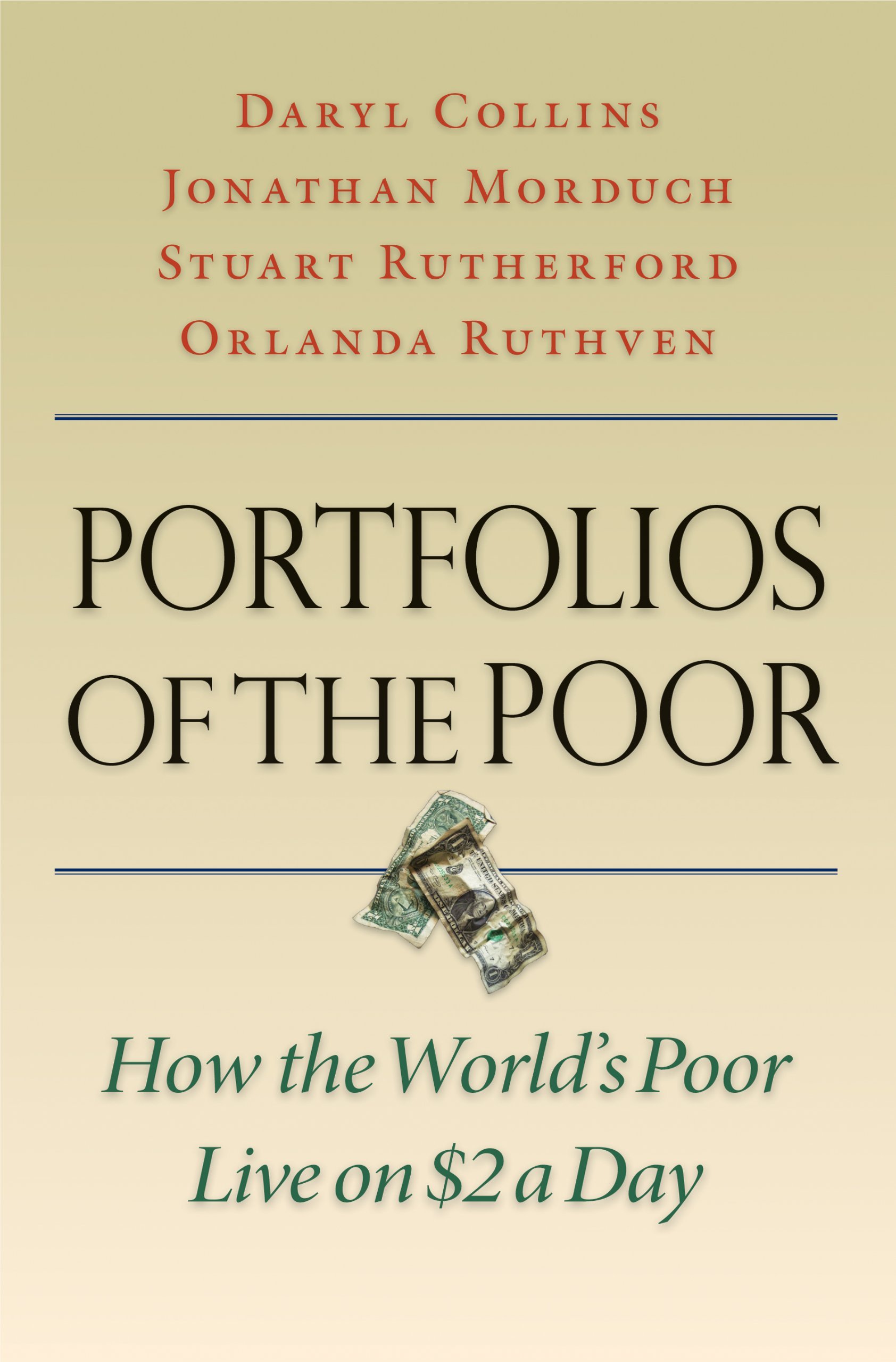
Jonathan is the co-author of The Financial Diaries: How American Families Cope in a World of Uncertainty (Princeton 2017) with Rachel Schneider, which reports on the financial lives of 235 working Americans over the course of a year. He also co-authored Portfolios of the Poor: How the World’s Poor Live on $2 a Day (Princeton 2009) and The Economics of Microfinance (MIT Press 2010). He is co-editor of Banking the World: Empirical Foundations of Financial Inclusion (MIT Press). With Dean Karlan, Morduch has written an empirically-oriented principles of economics text, Economics (McGraw-Hill 2017, 2nd ed.).
Jonathan has taught on the Economics faculty at Harvard, and has held visiting positions at Stanford, Princeton, Hitotsubashi University and the University of Tokyo. He holds a BA from Brown University and Ph.D. from Harvard University, both in Economics. He was awarded an honorary doctorate from the Université Libre de Bruxelles in December 2008 in recognition of his work on microfinance.