
Featured





Recent and ongoing research initiatives
We partner with leading organizations and scholars to conceptualize and execute research, with an emphasis on filling knowledge gaps that limit progress toward pro-poor financial inclusion.


FAI, in collaboration with research implementation partners EA Consultants, L-IFT, & MFO, in-country partners, and other academic researchers
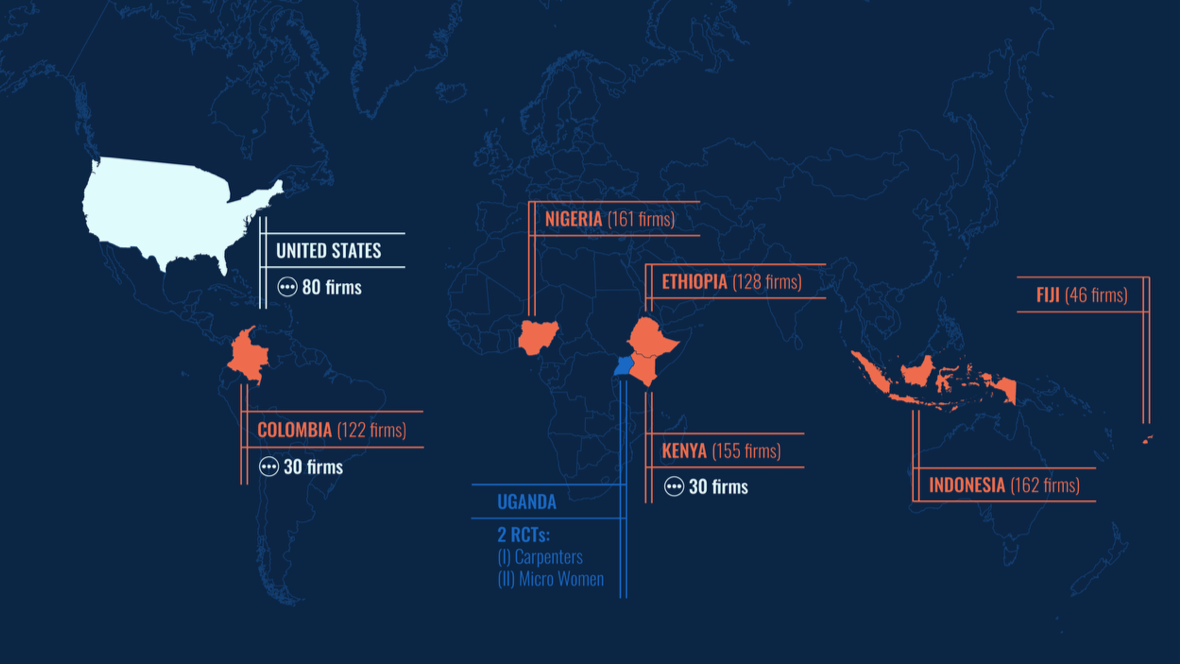
There are many initiatives to help small firms in low-income communities thrive, and yet, on average, small firms don’t grow. What are the barriers impeding small firm growth? Can a deeper understanding of the financial lives and choices of these firms unlock new opportunities?
Sidhya Balakrishnan, Sewin Chan, Tracy Cole, Sara Constantino, Ajay Chaudry, Johannes Haushofer, and Jonathan Morduch
Sometimes people simply need money. With an RCT in Compton—a city within Los Angeles County, California—researchers combined quantitative and qualitative analyses to show how impacts of transfers depend on who gets the transfers and the nature of their constraints.
Michael Gechter, Kei Hirano, Jean Lee, Jonathan Morduch, Saravana Ravindran, Abu Shonchoy, and Shashank Sreedharan
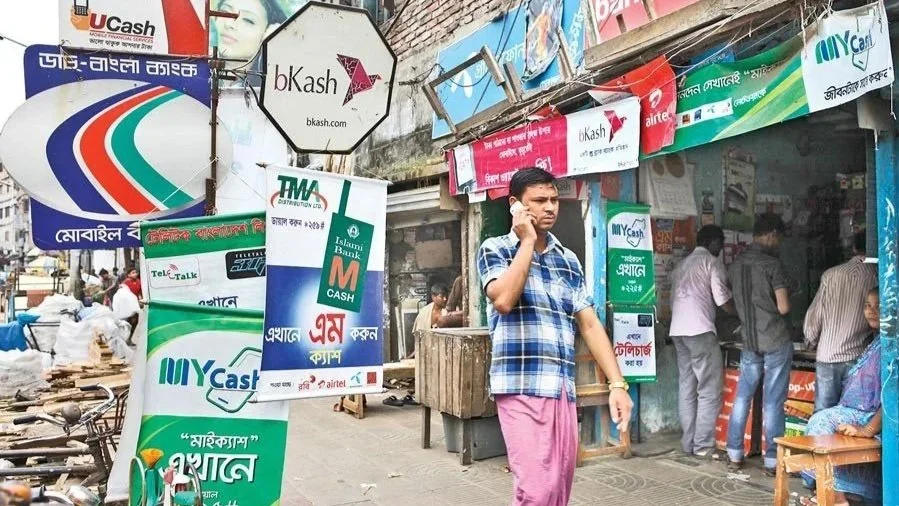
Where should experiments take place? This methodological question is applied to replications of a project that started in Bangladesh. The original project showed that making it easier for urban migrants to send remittances home can reduce poverty and improve conditions in rural areas.
Tim Ogden (FAI) and Tracy Cole (FAI) and Barbara Magnoni (EA Consultants)
Shared Success, a project of the Aspen Institute Economic Opportunities Program, is grounded in the understanding that building better jobs and building stronger businesses go hand in hand. The evaluation asks: how can Community Development Financial Institutions can provide more effective job quality support to local businesses? How do workers experience resulting changes in job quality?
A global consortium of researchers
The pandemic is a major threat to microfinance institutions, their operations and business models. How are leading MFIs weighing their choices and making decisions? What changes are they making and how will that alter the future of microfinance?
Daryl Collins, Rachel Schneider, Jonathan Morduch & Tim Ogden
How do low- and moderate- income Americans make ends meet, day-to-day and week-to-week, over the course of a full year? Revealing hard-to-see aspects of the financial lives of households on the margin to provide new insight to improve financial policies, programs and products.
Daryl Collins, Stuart Rutherford, Orlanda Ruthven & Jonathan Morduch
Everyone has heard of the $2 a day definition of poverty. But how do families actually live on $2 a day? A holistic approach to understanding the sophisticated financial lives of households living on “$2 a day” in Bangladesh, India & South Africa.
NYU Wagner Graduate School
105 E 17th Street
New York, NY 10003
© 2026 Financial Access Initiative
NYU Accessibility Guidelines
Natasha D’cruze, Joshua Merfeld, Jonathan Morduch
Poverty is seldom experienced as a steady condition: times get better, and times get worse, even within a given year. By taking a high-frequency view of people’s lives, the project connects poverty to financial capabilities and, ultimately, asks what poverty means.
Photo © UN4U/Joydeep Mukherjee.