




Editor’s Note:
I hadn’t appreciated the role that normalcy plays in allowing me to be sarcastic and jokey about the various topics I write about, until, well, everything stopped being normal. Please allow me some grace as I try to find a tone that is appropriately direct and honest, and still tries to find some humor in these dark days.
- Tim
1. Fraud, (Dis)Regulation, and Consumer (Non)Protection
In my faiV (recall Jonathan/Laura and I are trading off each edition) in January, I included an item about how mobile sports gambling and casinos have been taking over the US and causing significant harm. The Atlantic gave one of its reporters $10,000 to start mobile sports gambling and see what happened. It wasn’t good.
But mobile sports gambling seems small potatoes given the massive prediction market and commodities market bets that seem to be front-running Trump administration war decisions. You might think that such activities would be swiftly investigated and at least potentially prosecuted. But the Commodity Futures Trading Commission’s Chicago office which handled such major investigations and prosecutions no longer exists. All the lawyers there have been laid off or resigned. One former employee remarked, “If I was a different person I would launch a crypto scam right now, because there’s no cops on the beat.” He was wrong, though. If he was a different person he’d insider trade on prediction and commodities markets.
It’s worse than just neglect. The administration is suing to stop states from stepping into the federal regulatory and enforcement void. And more than half of the Trump administration’s individual pardons have been to people convicted of fraud or corruption. Forgive me if I’m skeptical of an executive order “combating fraud, cybercrime and predatory schemes” (would that be pun intended, or unintended? And if you get the joke, send me an email).
Since it’s that time of year, I can’t pass up the opportunity to remind you that Intuit continues its long-running effort to ensure that filing taxes in the US is so complicated that people pay for TurboTax.
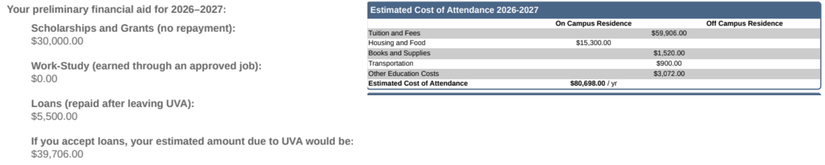
And if you’ll forgive me grinding a personal ax, my youngest has just a few weeks to choose where he goes to college. I was stunned to find that the University of Virginia’s financial summary documents a) subtract loans from the “amount due to UVa”, b) don’t provide clear information on the terms of the loans they are nominally recommending, and c) none of it actually adds up to their total cost of attendance elsewhere (it’s off by nearly 10%).
2. We've Only Just Begun
Fraud, cybercrime and predatory schemes are not just a US phenomena of course. The IMF has a new working paper noting that “cyber-enabled fraud has nearly tripled” and “losses represent a higher share of [GDP] in developing countries.”
Into that context comes Anthropic’s new model, Mythos, which it is not releasing publicly because it has uncovered thousands of previously unknown exploits in widely used software.
It’s a serious enough situation that apparently Fed Chair Jerome Powell and Treasury Secretary Scott Bessent held an urgent private meeting with bank CEOs to ensure that they were taking the threat to US financial infrastructure seriously.
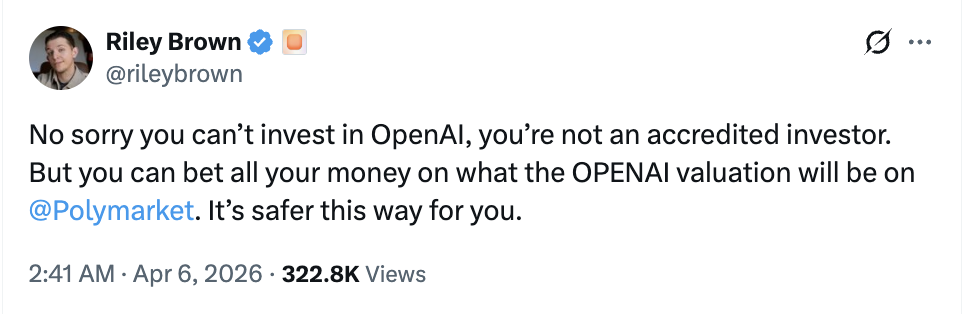
Are similar meetings happening in every developing country? Even if they were, is there any chance that the financial services industries in developing countries have the resources to identify and patch their systems? Will this extend to all the mobile money operators and fintechs in developing countries? If you were to place a bet on Kalshi and Polymarket about which widely used mobile money system will be hacked first, and when, what would it be? Seriously, I’m interested. And dismayed that I haven’t seen more clamor about this, even though it’s only been a few days. Where does digital public infrastructure go now?
3. Management
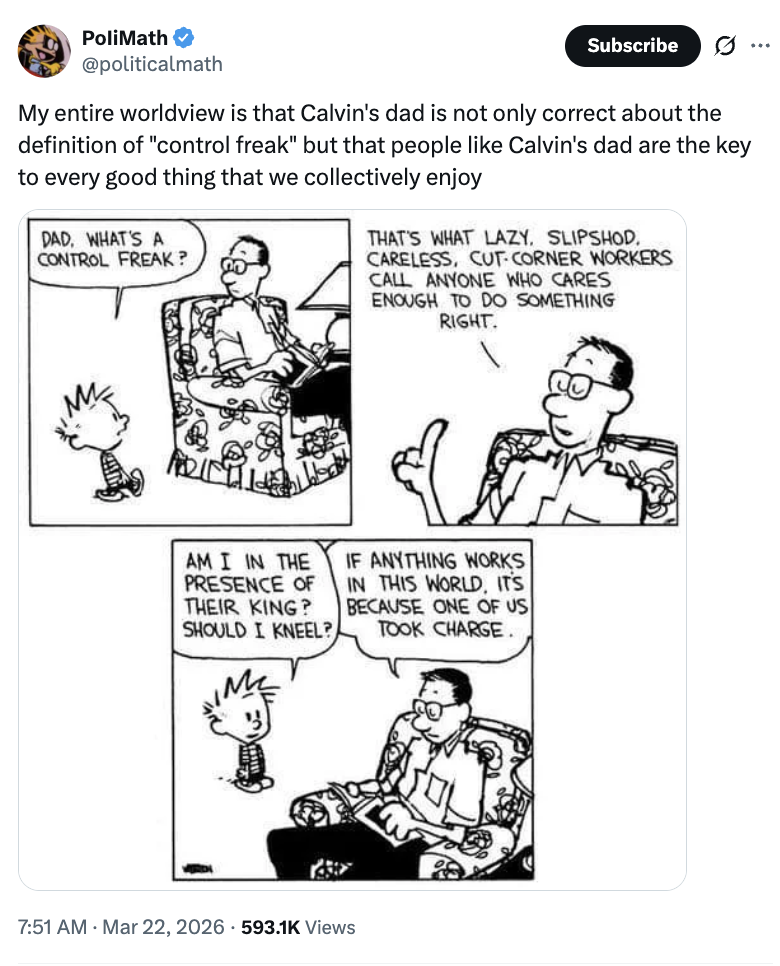
A few of you know that I spent a few years as a business book ghostwriter; I continue to harbor a not very secret obsession with management both at small (see Small Firm Diaries) and large scale. At some point I’ll find the time to write more on my theory that much of our current societal dysfunction can be traced to Dilbert and the contempt for managers it championed.
In the meantime, I continue to collect research on management, so I’m going to share a few things.
What do we know about the importance of managers? They are responsible for a significant amount of the variation in firm productivity. They transmit cultural norms about gender roles. They allocate workers to the roles where they can be most effective. When they don’t really manage, firm productivity falls off a cliff. But people who think they should be managers are overconfident and worse than average.
What other good papers about management are out there?
I can’t write anything these days without invoking the specter of AI, so, here’s the Management Singularity, and a different approach to the same ideas and their implications via Erik Brynjolfsson and Zoe Hitzig.
4. Social Investment And Philanthropy
Social investment and philanthropy have been another long-term interest for Jonathan and I. Right before coming to FAI I was part of the development blogosphere (pour one out for Philanthropy Action) when social entrepreneurship was a hot topic. A start-up known as SamaSource was a fixture of social entrepreneurship in those days, pitching bringing outsourced IT jobs to Sub-Saharan Africa as a way of providing jobs and a path out of poverty. I hadn’t thought about them for years, until I came across two articles about what is now just called Sama—and was shocked to learn what those outsourced IT jobs are now: “data labeling” for AI that frequently involves viewing horrific content for hours. Here’s an investigation from two Swedish newspapers on how very private and potentially non-consensual video from Meta glasses ends up in Kenya. According to its website, Sama is a Certified B Corp.
Social entrepreneurship is not the hot topic it once was, and neither is the Giving Pledge. Fewer billionaires are signing the pledge; Tyler Cowen is happy about that. But Craig Newmark is still a fan.
Regardless, there is potentially a flood of new private philanthropy coming in the next few years. Both Anthropic and OpenAI are likely to go public within the next few years (Starlink/xAI will probably beat them but we all know that money isn’t going to urgent global health needs). Many Anthropic employees have pledged to give away a significant amount of the wealth (full disclosure: I’m on the board of GiveWell with Anthropic co-founder Daniela Amodei). OpenAI has just pledged to give $1 billion in 2026; its first announced effort is focused on Alzheimer’s Disease.
The focus on new AI wealth has masked the biggest upcoming change in philanthropic flows. When Warren Buffett backed away from the Gates Foundation he didn’t back away from giving. His new plan calls for his children to give away at least $150 billion in the 10 years after his death. $15 billion per year is nearly 5% of current annual American philanthropy.
5. Small Firms
Anyone up for a faiVLive? We’ve just had a series of mid-point events sharing early findings from SFD-USA in most of the cities where we are following firms, and now we’re taking to the zoomwaves. I’ll be joined by Joyce Klein from Aspen’s Business Ownership Initiative, Tonya Rapley from ACE, a CDFI in Atlanta, and Sherri Lane from NYC Small Business Services. Join us.
I also was part of a recent event hosted by Aspen and the Responsible Business Lending Coalition. You can find the recording here. One thing that came up repeatedly in our midpoint events in cities and at the RBLC event is merchant cash advances. Planet Money has a recent excellent story about that you should listen to if you haven’t yet.
Another key topic is the quality of jobs in small firms. We worked with Aspen on the Shared Success project looking at the role CDFIs can play in helping small firms improve job quality. You can find the final reports here.
Image(s) of the Week(s)
The faiV is written by Timothy Ogden, Jonathan Morduch, and Laura Freschi, and produced by the Financial Access Initiative at NYU's Wagner Graduate School of Public Service.
Email: fai-wagner@nyu.edu
To read this in your inbox, subscribe to the faiV.